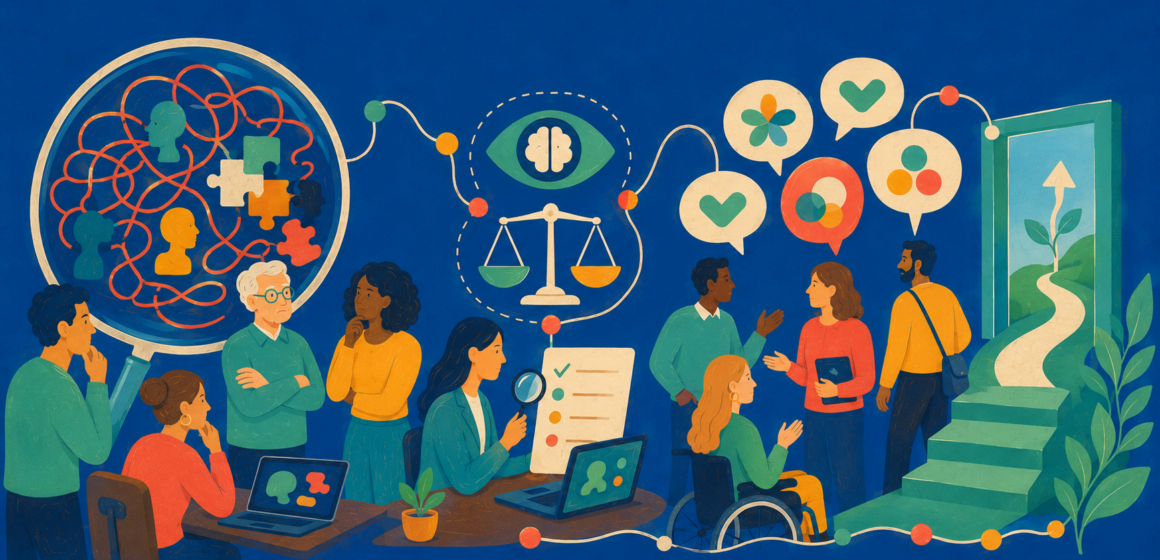
Cognitive Bias Reduction in the Workplace and Inclusive Language
In professional environments, we often assume that our decisions are based on objective observation. We evaluate people, select candidates, give feedback, and make judgements about competence, motivation, or potential. Most of the time, we believe that we are simply seeing the situation as it is.
However, psychology shows us something more complex. The human brain does not process all information equally. It selects, organises and simplifies. It looks for patterns and creates shortcuts, because without them we would be overwhelmed by the amount of information we face every day. These shortcuts are useful. They help us act quickly.
But sometimes they also influence our judgement without us noticing.